Building service contractors (BSCs) who manage carpet care always want to avoid complaints and callbacks at their customers’ sites. Having the right process in place is key for keeping carpet looking clean over time and maintaining customer satisfaction in a competitive marketplace. Low-moisture encapsulation is a popular carpet care approach, as it allows carpet to dry much more quickly than other methods. Whether your business is new to low-moisture encapsulation or well-versed in the technique, there are numerous factors to consider when choosing the best carpet cleaning chemicals.
Dealing with the Unavoidable
Spills on carpet are inevitable, regardless of the type of facility. In airports, time-crunched travelers often rush to eat in gate areas before boarding a plane, which can result in spots on carpet. In university libraries and student centers, coffee can take a tumble onto floors during a student’s late-night study session. In retail stores, customers can track in grass, mud and salt stains throughout the year that leaves unsightly marks on carpet.
Regularly performing low-moisture encapsulation helps BSCs ensure that carpet maintains a consistent appearance at all times. This method relies on chemistry to encapsulate built-up dirt and lift away stains to revive the color and appearance of carpet. The low-moisture approach ensures that carpet is dry after about 30 minutes.
Chemistry Considerations
There are several points to consider when in the market for the best carpet cleaning chemicals, as not every product is created equally. BSCs should focus on the following to ensure the products they are using are well-matched for the job:
- Quality encapsulation properties – There are a variety of encapsulation products on the market. Facility managers should look for solutions that feature crystalizing polymers and detergent components. This will ensure the product will fully crystalize the soils, which can then be removed through regular vacuuming. Some encapsulation products can leave a film on carpet, as well as sticky residues that easily attract more soil. Carefully vetting the quality of the chemistry is also important for avoiding maintenance and repair issues with the equipment due to incompatible ingredients. .
- Green Seal certification – Using effective, safe products that are transparent about their impact on the environment and the health of facility occupants is key. Green Seal is the nation’s leading ecolabel – products and services with the mark meet or exceed key sustainability criteria. When selecting carpet care chemistry, it’s important to find a product line that has been thoroughly reviewed by a team of experts. Look for a range that does not contain substances that aggravate asthma or ingredients with chronic inhalation toxicity. The products should also have low VOCs to prevent air pollution in places with sensitive groups like schools, daycares and long-term care facilities.
- Approved for use on wool carpet – The WoolSafe® Organization conducts independent testing to determine which products for the care of wool carpets, rugs and furnishing fabrics meet its performance and safety standards. Make sure your chemistry solutions have the WoolSafe Approved mark and look for additional certification marks from the organization if you prefer further assurances. For instance, look for an approved booster solution that helps brighten the color of carpet while also removing food and beverage stains, or an approved cleaning agent that can be used on light or moderately soiled carpet.
- Options for various stains – You will want several different stain fighters in your carpet care arsenal. Consider industrial carpet cleaner solutions that are specifically designed to remove stains and fight discoloration related to oil and grease, red food stains and protein stains caused by urine and vomit. With a variety of solutions available, you’ll always be prepared for every type of stain.
Using Chemistry the Right Way
Carefully choosing carpet cleaning chemistry is essential for removing numerous types of spots and protecting the flooring investment. Just as important is taking the time to thoroughly train staff. Employees should be taught to conduct visual inspections of carpet to identify any spots. Staff should also know when and how to use each type of chemistry. When employees understand how to properly match different chemistries to different stains, they will be more successful at treating unwanted spots.
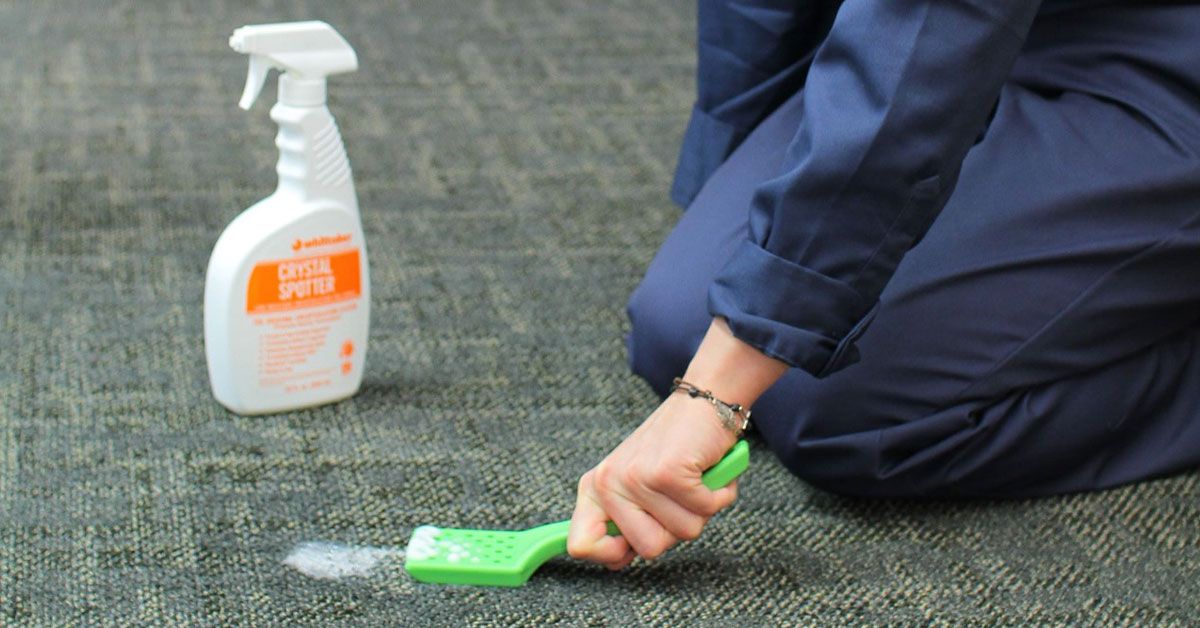
Interim maintenance also requires the right machines and tools to effectively remove carpet stains. Consider machines that feature counter-rotating brushes to lift the carpet pile and agitate the chemistry. The machine should also come equipped with landing gear to protect the brushes when not in use as well as a built-in solution tank to make it easier for employees to maintain carpet. Today’s machines are available in a variety of widths, allowing building service contractors to select the size or sizes that work for their customers’ sites. Handheld and handled spotting tools can also help employees quickly address stains.
The best carpet cleaning method combines the right chemistry, machines and tools. Taking the time to carefully select these solutions will offer savings and satisfaction in the long run, thereby strengthening the bottom line and customer relationships.