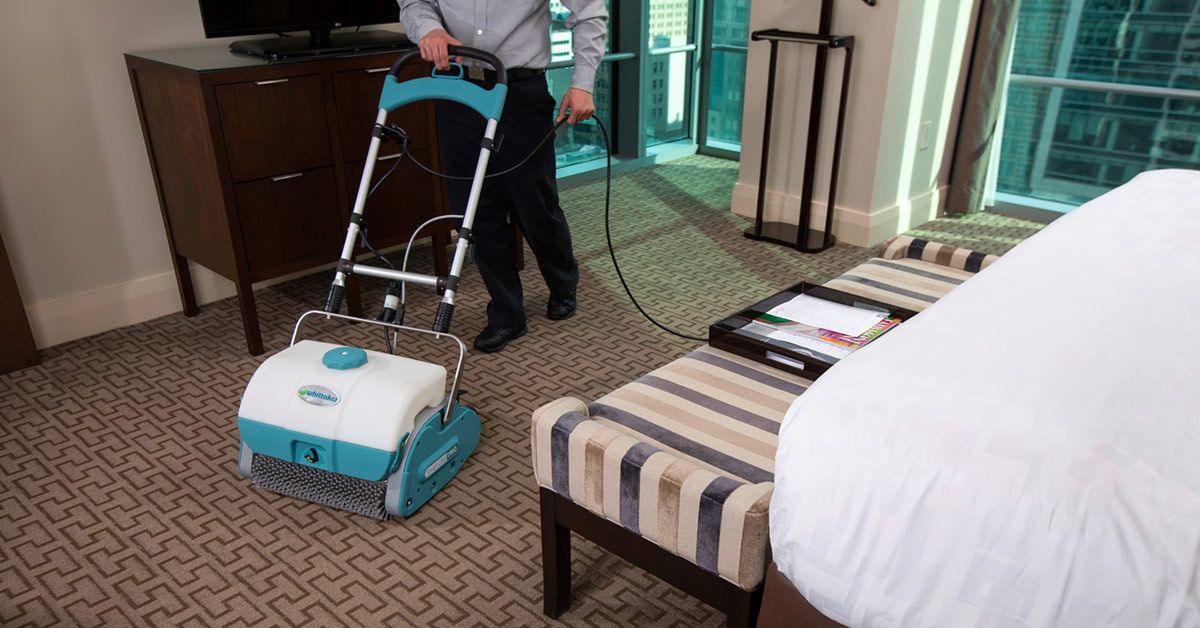
Bodily fluid carpet stains are unfortunate but sometimes inevitable, especially in long-term care environments. As accidents can occur at any time, these stains can also appear on carpet within schools, hotels and office environments, so it’s best to be prepared regardless of the type of facility you manage. Because the removal of these types of stains can spread germs, it’s important to take certain precautions when conducting carpet cleaning and managing the equipment used for these processes.
Creating a “Home-like” Environment with Carpet
Carpet installed in long-term care facilities and patient care spaces, such as waiting rooms, offers noise reduction and helps “humanize” the healthcare environment. Compared to hard flooring like wood and tile, carpet is often preferred as it can also reduce injuries among the elderly from slips, trips and falls. However, compared to hard surface flooring, carpet can be more difficult to clean when blood or other bodily fluids stain it.
In healthcare environments, new carpet can quickly become colonized with bacterial growth in just four weeks. With proper care, including vacuuming and interim maintenance, facilities can reduce the risk of contamination and transmission, and improve carpet appearance. Daily vacuuming is key in carpeted areas that must withstand frequent foot traffic, including hallways, resident rooms and living spaces. To ensure microorganisms are not dispersed into the air while vacuuming, make sure vacuum cleaners are equipped with HEPA filters and properly maintained over time.
Cleaning with Caution
It’s important to clean up body fluids on carpet in the workplace immediately and with caution. Follow the federal, state and local laws and regulations to clean up and dispose of any potential blood borne pathogens. These fluids may include blood, sweat, vomit or urine. Workers must wear personal protection equipment (PPE), such as rubber or disposable gloves, to avoid contact when addressing the spill.
Before cleaning up any stain, read and follow the care instructions as well as any warnings provided by the carpet manufacturer. In addition to taking special precautions for protecting employees, body fluid stain removal requires the proper chemistry and equipment. To address spills carefully and accurately, take the proper steps:
- Remove as much of the stain as possible. By blotting with a white paper towel, remove as much moisture as possible from the spill. If the stain is caused by vomit, you may need to scrape or remove any excess material from the carpet before blotting.
- Apply a spotting chemical to the area. Use a spotting chemical that is effective and ready-to-use on organic stains. Do not allow the container to come into contact with the stain to avoid cross-contamination. Spray the solution on the stain and use a blotting motion within the affected area. Any solutions used to remove blood or organic stains should remain at a cool temperature, as using a warm solution and water will further set the stain into carpet fibers.
- If the spot remains, moisten the stained area. If the stain remains after using a spotting solution, moisten the area with hydrogen peroxide and allow it to stand for at least one hour. Continue blotting until the stain is gone.
- Agitate the area with a spotting tool. Once the stain is removed, apply a general spotting agent and agitate with the Whittaker Smart Care®TRIO or the Carpet Roamer Spotting Tool. It’s not recommended to use carpet cleaning methods that disperse microorganisms into the air, as it may increase the risk of airborne infection.
- Vacuum the area. Once the area has dried, vacuum to remove any dried substances.
Before and after removing body fluid stains from carpet, use a black light to check the area. If the spot still glows, it has not been completely removed. One or two days after the spill, you may need to check the area for any remaining sticky components.
It’s also important to note that by adding water to a spill, odors may become stronger. Only use water to rinse – do not add it to the chemistry solution. After removing body fluid stains from carpet, continue to clean carpet regularly with daily vacuuming and spotting and interim maintenance. If any soils have reached the base of carpet fibers and cannot be removed through spotting techniques, restorative cleaning may be required.
Keeping Equipment Clean
When it comes to body fluid stains, the work goes beyond cleaning the carpet. Machine and spotting tool brushes must be properly cleaned after they’ve been in contact with the stain to reduce the risk of cross contamination. Especially in long-term care facilities where residents may have compromised immune systems, it’s crucial to reduce the possibility of spreading infections from room to room.
To clean carpet care equipment, wear the proper PPE and remove the collection tray. Carefully empty any soil or debris into a disposable bag. Remove brushes and wipe the axles and bottom of the machine with a disinfectant. Use a disinfectant to thoroughly clean and/or soak the brushes so they are ready for the next use.